Clean Bulk vs Dirty Bulk: Which Approach is Safer and More Effective?
Clean Bulk vs Dirty Bulk: Which Approach is Safer and More Effective?
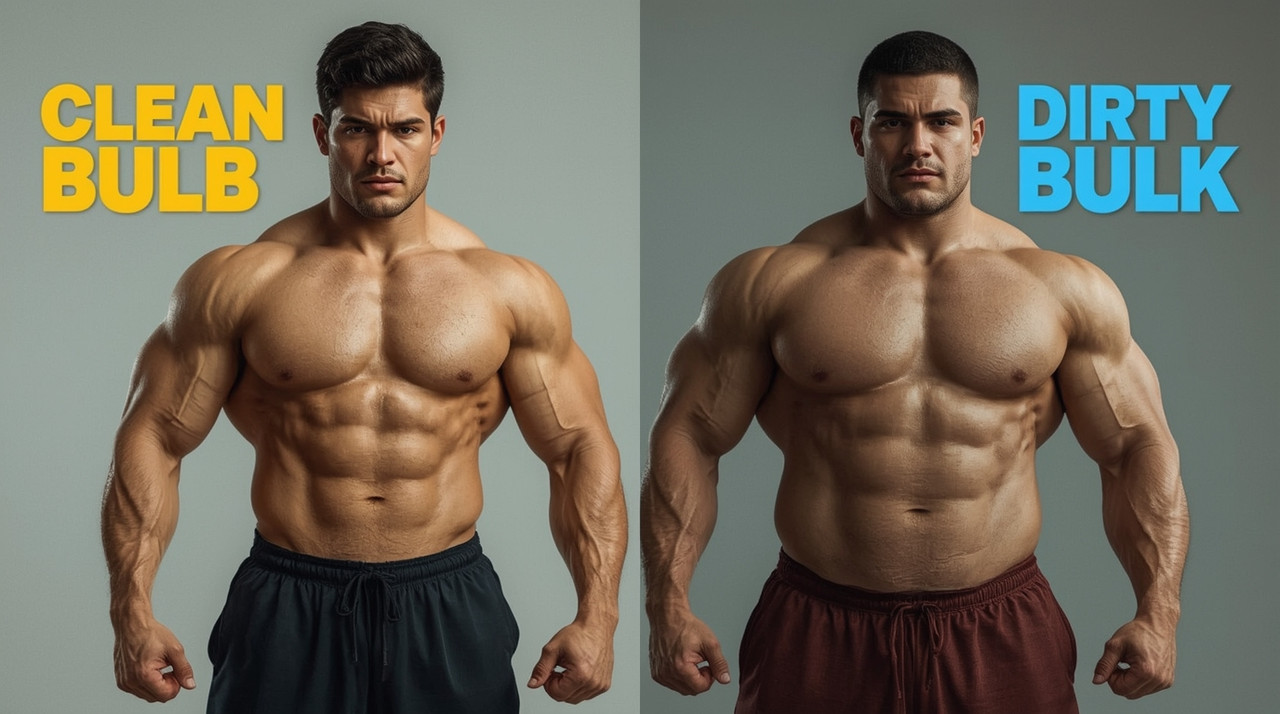
The Great Bulking Debate: Quality vs Quantity
The age-old question in bodybuilding circles—clean bulk vs dirty bulk—represents one of the most fundamental divides in muscle-building nutrition strategies. While both approaches aim to create the calorie surplus necessary for muscle growth, their methodologies and outcomes differ dramatically. Clean bulking emphasizes precision, nutrient density, and controlled surpluses, while dirty bulking prioritizes maximum calorie intake regardless of source. Understanding the science behind these approaches is crucial for athletes seeking to maximize muscle gains while minimizing health risks and excessive fat accumulation.
Recent research in sports nutrition has shed light on the physiological differences between these bulking strategies. Studies demonstrate that the quality of calorie surplus significantly impacts not only body composition outcomes but also metabolic health, training performance, and long-term sustainability (Helms et al., 2014). This comprehensive analysis examines the scientific evidence, compares practical implementation strategies, and provides evidence-based recommendations for choosing the optimal bulking approach based on individual goals, experience level, and health considerations.
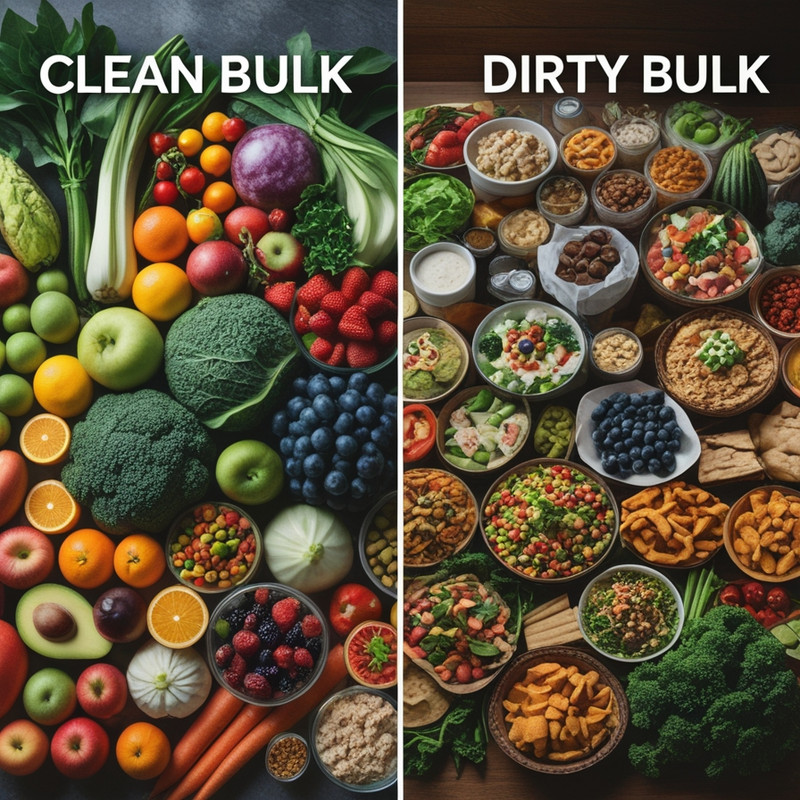
Clean Bulking: The Precision Approach to Muscle Growth
The Science of Controlled Surplus
Understanding the principles behind clean bulking effectiveness:
Optimal Muscle Protein Synthesis
Research indicates that muscle protein synthesis maximizes at approximately 300-500 calories above maintenance. Larger surpluses primarily increase fat storage rather than muscle growth (Aragon et al., 2017).
Strategic Fueling
Clean bulking emphasizes nutrient timing around workouts, ensuring carbohydrates and protein are available when muscles are most receptive to nutrient uptake and utilization.
Micronutrient Support
Nutrient-dense foods provide essential vitamins, minerals, and phytochemicals that support training recovery, hormone production, and overall metabolic health.
Clean Bulking Protocol
Calorie Surplus: 300-500 calories above maintenance
Weekly Weight Gain Target: 0.5-1 lb (0.2-0.45 kg)
Protein Intake: 1.6-2.2g per kg bodyweight
Carbohydrate Focus: 4-7g per kg bodyweight
Fat Intake: 20-30% of total calories
Duration: 8-16 weeks followed by maintenance or cutting phase
Evidence-Based Clean Bulking Benefits
| Benefit | Mechanism | Research Support | Practical Impact | Long-term Advantage |
|---|---|---|---|---|
| Superior Muscle-to-Fat Ratio | Precise calorie control minimizes excess energy storage | Strong (Garthe et al., 2011) | Less time needed for cutting phases | More sustainable body composition |
| Improved Metabolic Health | Nutrient-dense foods support insulin sensitivity | Strong (Slater & Phillips, 2011) | Better energy levels and recovery | Reduced chronic disease risk |
| Enhanced Training Performance | Consistent energy from complex carbohydrates | Moderate (Kerksick et al., 2017) | More productive training sessions | Greater long-term progress |
| Better Hormonal Balance | Adequate micronutrients support endocrine function | Moderate (Heaney et al., 2010) | Optimal testosterone and growth hormone levels | Sustainable muscle building capacity |
Dirty Bulking: The High-Risk, High-Reward Approach
The All-You-Can-Eat Philosophy
Examining the rationale and risks of dirty bulking:
Dirty Bulking Strategy Breakdown
| Strategy Element | Typical Implementation | Perceived Benefit | Actual Risk | Scientific Evidence |
|---|---|---|---|---|
| Calorie Surplus | 700-1000+ calories above maintenance | Maximum muscle growth potential | Excessive fat gain, metabolic strain | Contradicts muscle synthesis research |
| Food Selection | Any calorie source, often processed foods | Convenience, calorie density | Nutrient deficiencies, inflammation | Strong against (Mozaffarian et al., 2011) |
| Weight Gain Pace | 2-4 lbs weekly | Rapid size increase | Poor muscle-to-fat ratio, stretch marks | Contraindicated for natural athletes |
| Duration | Extended periods (months) | Continuous growth | Insulin resistance, cardiovascular strain | Associated with health deterioration |
Practical Dirty Bulking Dangers
Specific health and performance risks of dirty bulking:
Metabolic Consequences
Risk: Insulin resistance development
Mechanism: Chronic excessive calorie intake
Evidence: Strong association with processed foods
Outcome: Reduced nutrient partitioning efficiency
Long-term: Increased type 2 diabetes risk
Cardiovascular Strain
Risk: Blood pressure and lipid changes
Mechanism: High saturated fat and sodium intake
Evidence: Documented in bodybuilding case studies
Outcome: Reduced cardiovascular efficiency
Long-term: Atherosclerosis risk increase
Digestive Issues
Risk: Gut microbiome disruption
Mechanism: Lack of fiber and diverse nutrients
Evidence: Emerging research on processed foods
Outcome: Reduced nutrient absorption
Long-term: Chronic digestive problems
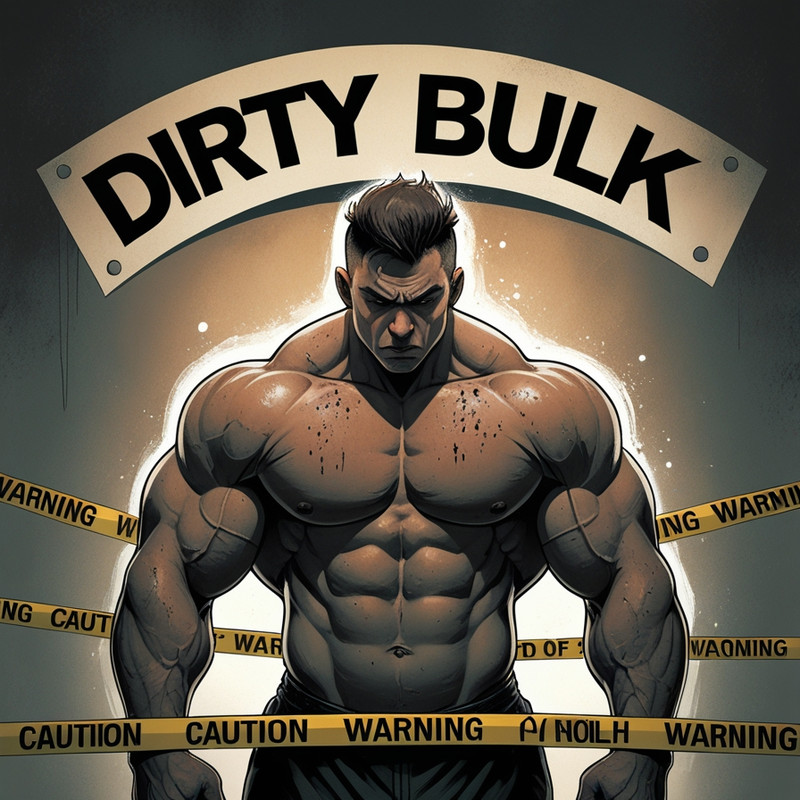
When Dirty Bulking Might Be Considered
Despite the significant risks, dirty bulking might be temporarily considered in specific scenarios: extreme hardgainers who struggle to maintain weight, athletes with exceptionally high metabolic demands, or during very short-term mass phases with immediate medical supervision. However, even in these cases, a modified approach emphasizing calorie density without completely abandoning food quality is preferable to traditional dirty bulking methods.
Head-to-Head: Clean Bulk vs Dirty Bulk Comparison
Scientific Evidence and Practical Outcomes
Direct comparison of clean bulking vs dirty bulking effectiveness:
Comprehensive Bulking Strategy Comparison
| Comparison Factor | Clean Bulking | Dirty Bulking | Scientific Verdict | Practical Implications |
|---|---|---|---|---|
| Muscle Gain Rate | 0.5-1 lb/week (sustainable) | 1-2 lb/week (mostly fat) | Clean bulk superior for lean mass | Better long-term muscle retention |
| Fat Gain Ratio | 20-30% of weight gain | 50-70% of weight gain | Clean bulk significantly better | Shorter cutting phases needed |
| Health Markers | Maintained or improved | Often deteriorated | Clear advantage clean bulk | Better long-term health outcomes |
| Training Performance | Consistent improvement | Initial boost then plateau | Clean bulk more sustainable | More productive long-term |
| Psychological Impact | Disciplined but satisfying | Initial freedom then burden | Individual preference dependent | Clean bulk better adherence long-term |
Six-Month Projection Comparison
Expected outcomes from 6 months of consistent clean bulking vs dirty bulking:
Clean Bulk Results
Duration: 6 months (24 weeks)
Total Weight Gain: 12-24 lbs
Estimated Muscle Gain: 8-18 lbs
Estimated Fat Gain: 4-6 lbs
Health Markers: Maintained or improved
Cutting Phase Needed: 4-8 weeks
Dirty Bulk Results
Duration: 6 months (24 weeks)
Total Weight Gain: 24-48 lbs
Estimated Muscle Gain: 8-16 lbs
Estimated Fat Gain: 16-32 lbs
Health Markers: Likely deteriorated
Cutting Phase Needed: 12-20+ weeks
Net Advantage Analysis
Muscle Difference: Minimal to clean bulk favor
Fat Difference: Significant clean bulk advantage
Time Efficiency: Clean bulk saves 8-12+ weeks
Health Impact: Clear clean bulk superiority
Overall Winner: Clean bulking approach
Practical Clean Bulking Implementation
Building Your Clean Bulk Nutrition Plan
Step-by-step clean bulking strategy development:
Clean Bulk Calculation Formula
Step 1: Calculate maintenance calories (bodyweight in lbs × 14-16)
Step 2: Add 300-500 calorie surplus
Step 3: Set protein intake (bodyweight in lbs × 0.8-1.2)
Step 4: Set fat intake (25% of total calories)
Step 5: Fill remaining calories with carbohydrates
Step 6: Adjust based on weekly progress (0.5-1 lb gain)
Sample Clean Bulk Meal Plans
Practical clean bulking meal structures for different calorie levels:
3000 Calorie Clean Bulk Day (180 lb athlete)
Breakfast (600 calories): 4 whole eggs, 2 slices whole grain toast, 1 cup oatmeal with berries
Lunch (700 calories): 8 oz chicken breast, 1.5 cups brown rice, 2 cups mixed vegetables, 1 tbsp olive oil
Pre-Workout (400 calories): 1 scoop protein powder, 1 banana, 1 tbsp almond butter
Post-Workout (600 calories): 2 scoops protein powder, 2 cups milk, 1 cup granola
Dinner (700 calories): 8 oz salmon, 1 large sweet potato, 2 cups broccoli, 1/2 avocado
3500 Calorie Clean Bulk Day (200 lb athlete)
Breakfast (700 calories): 5 whole eggs, 3 slices whole grain toast, 1.5 cups oatmeal with fruit and nuts
Lunch (800 calories): 10 oz lean beef, 2 cups quinoa, large salad with olive oil dressing
Pre-Workout (500 calories): 1.5 scoops protein powder, 1.5 bananas, 2 tbsp peanut butter
Post-Workout (700 calories): 2 scoops protein powder, 2 cups Greek yogurt, 1.5 cups granola, honey
Dinner (800 calories): 10 oz cod, 3 cups roasted potatoes, 2 cups vegetables, 1 avocado
Diet-Specific Clean Bulking Adaptations
| Diet Type | Protein Adjustments | Calorie-Dense Foods | Potential Challenges | Solutions |
|---|---|---|---|---|
| Vegetarian | Eggs, dairy, legumes, protein powders | Nuts, seeds, avocados, olive oil | Meeting protein needs, calorie density | Strategic supplementation, nut butters |
| Vegan | Legumes, tofu, tempeh, vegan protein powder | Nuts, seeds, coconut, plant oils | Complete proteins, vitamin B12 | Protein combining, fortified foods |
| Gluten-Free | Standard protein sources | Rice, quinoa, potatoes, gluten-free oats | Carbohydrate variety, cost | Rice, potatoes, alternative grains |
| Dairy-Free | Meat, eggs, fish, plant proteins | Nut butters, oils, avocados, coconut | Calcium sources, cooking adjustments | Fortified plant milks, leafy greens |

Individual Factors in Bulking Strategy Selection
Choosing Your Optimal Approach
Key factors influencing the clean bulk vs dirty bulk decision:
Individual Factor Analysis
| Individual Factor | Clean Bulk Preference | Dirty Bulk Consideration | Rationale | Recommendation |
|---|---|---|---|---|
| Training Experience | All levels, especially advanced | Novices only (short-term) | Advanced trainees have slower gains | Clean bulk for most trainees |
| Metabolic Rate | Normal to fast metabolism | Extremely fast metabolism only | Most can gain on modest surplus | Individualize based on response |
| Health Status | Any health status | Perfect health required | Dirty bulk stresses systems | Clean bulk for health concerns |
| Time Availability | Moderate time for meal prep | Very limited time | Dirty bulk requires less planning | Meal prep solves time issues |
| Aesthetic Goals | Lean, athletic appearance | Maximum size regardless of fat | Different philosophical approaches | Clean bulk for most goals |
Experience-Level Specific Recommendations
Tailored bulking strategies based on training experience:
Beginner (0-1 year training)
Recommended: Moderate clean bulk
Calorie Surplus: 300-400 calories
Expected Gains: 1-1.5 lb/month muscle
Duration: 6-12 months
Rationale: Maximize newbie gains efficiently
Special Consideration: May tolerate slightly higher surplus
Intermediate (1-3 years training)
Recommended: Strict clean bulk
Calorie Surplus: 250-350 calories
Expected Gains: 0.5-1 lb/month muscle
Duration: 3-6 month phases
Rationale: Slower gains require precision
Special Consideration: Cycle with maintenance periods
Advanced (3+ years training)
Recommended: Precision clean bulk
Calorie Surplus: 200-300 calories
Expected Gains: 0.25-0.5 lb/month muscle
Duration: 2-4 month phases
Rationale: Minimal muscle gain potential
Special Consideration: Very gradual increases
The Hardgainer Exception
Individuals with exceptionally fast metabolisms or extreme difficulty gaining weight might consider a modified approach between clean and dirty bulking. This involves a 500-700 calorie surplus but maintains food quality through calorie-dense healthy options like nuts, seeds, oils, and dried fruits rather than processed junk foods. Even hardgainers should avoid traditional dirty bulking due to the negative health consequences.
Common Bulking Mistakes and Evidence-Based Solutions
Avoiding Pitfalls in Both Approaches
Addressing frequent bulking mistakes and their solutions:
| Common Mistake | Consequence | Scientific Basis | Practical Solution | Expected Improvement |
|---|---|---|---|---|
| Excessive Calorie Surplus | Unnecessary fat gain, metabolic strain | Muscle synthesis plateaus around 500-calorie surplus | Limit surplus to 300-500 calories maximum | Better muscle-to-fat ratio, easier cutting |
| Neglecting Food Quality | Poor recovery, inflammation, health issues | Processed foods increase systemic inflammation | 80/20 rule: 80% whole foods, 20% flexibility | Improved recovery, better health markers |
| Inadequate Protein Timing | Suboptimal muscle protein synthesis | Protein distribution affects synthesis rates | 20-40g protein every 3-4 hours | Enhanced muscle growth efficiency |
| Ignoring Micronutrients | Poor recovery, immune function issues | Vitamins/minerals essential for metabolic processes | Emphasize fruit/vegetable variety | Better overall health and performance |
| Over-relying on Supplements | Wasted money, potential health risks | Whole foods provide superior nutrient matrix | Food first, supplements strategically | Better nutrient utilization, cost savings |
Progressive Bulking Implementation
Four-phase approach to successful clean bulking:
Phase 1: Assessment (Week 1-2)
Focus: Establish maintenance calories
Actions: Track intake, monitor weight stability
Nutrition: Maintain current intake, assess habits
Goal: Accurate baseline establishment
Outcome: Precise starting point for surplus
Phase 2: Initiation (Week 3-6)
Focus: Implement modest surplus
Actions: Add 300 calories, monitor progress
Nutrition: Emphasize whole food additions
Goal: Establish consistent weight gain
Outcome: 0.5-1 lb weekly weight increase
Phase 3: Optimization (Week 7-12)
Focus: Fine-tune based on results
Actions: Adjust calories based on progress
Nutrition: Optimize timing and distribution
Goal: Maximize lean mass gains
Outcome: Quality muscle accumulation
Phase 4: Transition (Week 13-16)
Focus: Prepare for next phase
Actions: Assess results, plan next steps
Nutrition: Maintain or transition to cutting
Goal: Strategic phase transition
Outcome: Continued progress direction
The Verdict: Clean Bulk Emerges as Superior Strategy
After examining the scientific evidence, practical outcomes, and long-term implications, the clean bulk vs dirty bulk debate resolves clearly in favor of the controlled, nutrient-dense approach. Clean bulking provides virtually all the muscle-building benefits of its counterpart while avoiding the significant health risks, excessive fat gain, and psychological burdens associated with dirty bulking. The precision of a modest calorie surplus from quality food sources aligns with our understanding of muscle protein synthesis limits and represents the most efficient path to sustainable muscle growth.
The appeal of dirty bulking's simplicity and perceived faster results must be weighed against the substantial costs: extended cutting phases, potential health consequences, and the discouragement of watching hard-earned muscle definition disappear under layers of unnecessary fat. For the vast majority of natural athletes, the patient, disciplined approach of clean bulking yields better long-term results, improved health markers, and a more positive relationship with both food and training.
By implementing the evidence-based clean bulking strategies outlined in this guide, athletes can achieve their muscle growth goals while maintaining health, performance, and the ability to enjoy their results without lengthy, difficult cutting phases. The patient, precise approach to bulking may require more initial planning and discipline, but the long-term rewards far outweigh the temporary convenience of less structured methods.
Scientific References
- Garthe, I., Raastad, T., Refsnes, P. E., Koivisto, A., & Sundgot-Borgen, J. (2011). Effect of two different weight-loss rates on body composition and strength and power-related performance in elite athletes. International Journal of Sport Nutrition and Exercise Metabolism, 21(2), 97-104.
- Helms, E. R., Aragon, A. A., & Fitschen, P. J. (2014). Evidence-based recommendations for natural bodybuilding contest preparation: nutrition and supplementation. Journal of the International Society of Sports Nutrition, 11(1), 20.
- Aragon, A. A., Schoenfeld, B. J., Wildman, R., Kleiner, S., VanDusseldorp, T., Taylor, L., ... & Antonio, J. (2017). International society of sports nutrition position stand: diets and body composition. Journal of the International Society of Sports Nutrition, 14(1), 16.
- Slater, G. J., & Phillips, S. M. (2011). Nutrition guidelines for strength sports: sprinting, weightlifting, throwing events, and bodybuilding. Journal of Sports Sciences, 29(sup1), S67-S77.
- Kerksick, C. M., Arent, S., Schoenfeld, B. J., Stout, J. R., Campbell, B., Wilborn, C. D., ... & Antonio, J. (2017). International society of sports nutrition position stand: nutrient timing. Journal of the International Society of Sports Nutrition, 14(1), 33.
- Heaney, S., O'Connor, H., Gifford, J., & Naughton, G. (2010). Comparison of strategies for assessing nutritional adequacy in elite female athletes' dietary intake. International Journal of Sport Nutrition and Exercise Metabolism, 20(3), 245-256.
- Mozaffarian, D., Hao, T., Rimm, E. B., Willett, W. C., & Hu, F. B. (2011). Changes in diet and lifestyle and long-term weight gain in women and men. New England Journal of Medicine, 364(25), 2392-2404.
- Schoenfeld, B. J., Aragon, A. A., & Krieger, J. W. (2013). The effect of protein timing on muscle strength and hypertrophy: a meta-analysis. Journal of the International Society of Sports Nutrition, 10(1), 53.
- Thomas, D. T., Erdman, K. A., & Burke, L. M. (2016). Position of the Academy of Nutrition and Dietetics, Dietitians of Canada, and the American College of Sports Medicine: nutrition and athletic performance. Journal of the Academy of Nutrition and Dietetics, 116(3), 501-528.
- Longland, T. M., Oikawa, S. Y., Mitchell, C. J., Devries, M. C., & Phillips, S. M. (2016). Higher compared with lower dietary protein during an energy deficit combined with intense exercise promotes greater lean mass gain and fat mass loss: a randomized trial. The American Journal of Clinical Nutrition, 103(3), 738-746.
Ready to Start Your Smart Bulk?
Get personalized guidance and science-backed strategies for optimal muscle growth.
Explore Bulking Plans Use Calorie Calculator Subscribe for Updates
Join the conversation